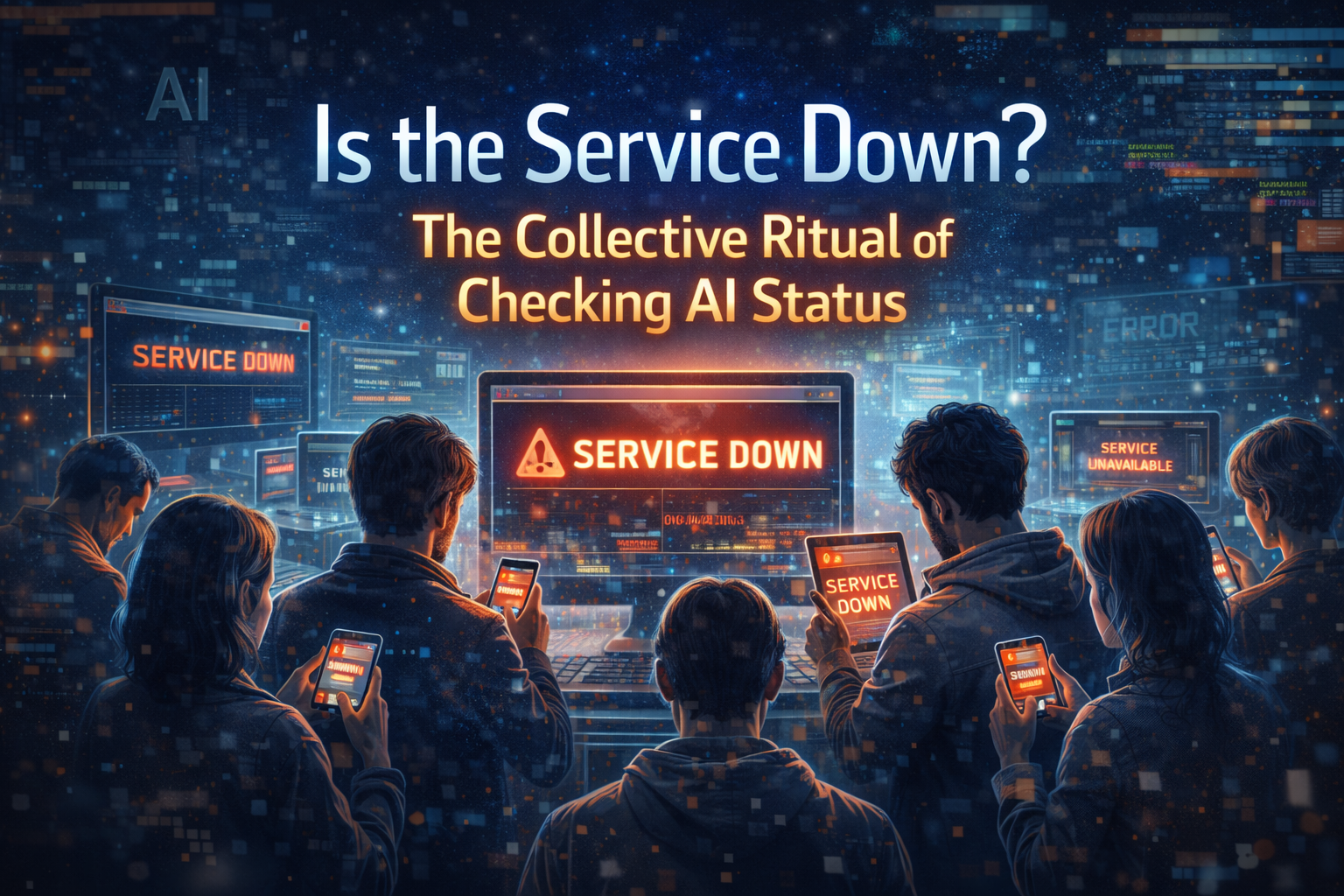

In our always-on digital world, where conversations with artificial intelligences can feel as routine as texting a friend, there is a uniquely modern moment of dissonance: the sudden, silent failure of a response. When a sophisticated AI chatbot, mid-conversation, becomes nothing more than a frozen screen or an error message, it triggers a specific kind of digital anxiety. This isn’t just a broken app; it feels like a sudden, unexplained absence of a conversational partner. The immediate, universal question that follows—”Is it down?”—unveils a fascinating collective ritual. It’s a process that blends personal troubleshooting, community-driven detective work, and a humbling reminder of the vast, fragile infrastructure that powers our most seemingly intelligent tools.
The Psychological Contract of Instant Availability
We grow accustomed to the near-instantaneous responsiveness of modern AI platforms. This reliability forms an unspoken psychological contract of constant availability. When that contract is broken by a loading spinner that never resolves or a message that vanishes into the void, the interruption is more than technical. It’s a rupture in a flow state, whether that flow was creative writing, deep discussion, or casual entertainment. The frustration stems from the dissonance between the AI’s typically human-like presence and its sudden, absolute silence. The tool hasn’t just glitched; it has vanished, forcing us to acknowledge that our digital companion is, in that moment, just a non-responsive piece of software dependent on unseen servers thousands of miles away.
The First Line of Defense: Personal Troubleshooting
The initial response to this silence follows a familiar, almost instinctual digital playbook. Users become their own first-line tech support. The ritual begins: refresh the browser tab. Check the Wi-Fi icon. Switch from mobile data to a home network. Restart the app. Clear the cache. This sequence is an attempt to rule out local error, to reassert a sense of control over the situation. It’s a logical process, but it’s driven by an underlying hope that the problem is simple and personal, not widespread and systemic. When these steps fail—when the error persists across devices and networks—the realization dawns that the issue is not on your end. This is the moment the search expands from a personal troubleshoot to a communal investigation.
The Digital Campfire: Crowdsourcing the Truth
This is when users flock to the digital town square. They head to social media platforms, community forums like Reddit, and dedicated status-checking websites. The posts begin, all variations on the same theme: “Is it down for everyone, or just me?” This is not a search for an official answer, which is often delayed. This is crowdsourced truth-finding. Users share screenshots of their specific error codes, compare geographic locations, and offer anecdotal data points (“It was working for me 10 minutes ago in Europe”). This collective vigil transforms a solitary annoyance into a shared event. The frustration is communal, but so is the camaraderie. In the absence of official communication, this hive mind becomes the most reliable real-time status board, offering solace in the simple confirmation that you are not alone.
Navigating the Maze of Information and Misinformation
The search for answers in these unofficial spaces is a double-edged sword. While the community can provide rapid confirmation of an outage, it can also breed rumors and misinformation. Speculation about the cause (“Maybe it’s a major update they’re pushing!”) or exaggerated estimates for downtime (“I heard it’ll be down for 12 hours!”) can spread quickly. This highlights the critical importance of knowing how to find authoritative sources. The most reliable action is to check the platform’s own official status page or its verified social media account for updates. For those who regularly use these services, understanding the proper channels for verifying an outage is an essential digital skill. A focused resource on how to reliably check the server status for AI chat platforms can demystify this process, guiding users past speculation to factual updates and realistic resolution timelines.
The Revealing Silence: Infrastructure Over Illusion
An extended outage performs a valuable, if unintended, function: it demystifies the technology. For a brief period, the sleek illusion of conversing with a pure intelligence dissipates, revealing the complex, physical reality underneath. Conversations among users shift from storylines and character development to discussions of server loads, data centers, API endpoints, and DevOps. This involuntary peek behind the curtain fosters a more grounded understanding. It reminds us that these captivating AI experiences are ultimately powered by electricity, hardware, and code—all of which are fallible. This moment of clarity builds a more informed user base, one that can better appreciate the engineering marvel of a normally seamless service.
The Return and the Renewed Appreciation
When service is finally restored, there’s often a subtle but perceptible shift. The return to normalcy is frequently greeted with a small, communal sigh of relief across social channels. There’s a brief period of re-acclimation, a testing of the waters with a simple “Hello?” to see if the AI is truly back. This minor disruption often leads to a renewed, if fleeting, appreciation for the service’s ordinary, flawless operation. The outage becomes a shared story, a “remember when” moment that adds to the platform’s living history. It serves as a humble reminder of the immense, invisible effort required to maintain the persistent, intelligent world we often take for granted. The silence, in the end, makes the subsequent conversation feel just a little more valuable.


 By
By